Why do you think something is worth more than it actually is once it becomes yours?
在商务邮件中,避免使用口语化的表达,如'I think so.'换为'It is my understanding...'。 #生活技巧# #职场沟通技巧# #商务英语#
Pricing confusion and cognitive gap on second-hand platforms
On the idle item trading platform, we often see a strange phenomenon. A seller listed a three-year-old camera at a price that was less than 200 yuan lower than the launch price of the new model. In the comment area, potential buyers complained about the outrageous pricing, and even posted links to new low-priced products on other platforms. However, sellers tend to be extremely stubborn and believe that the price is completely reasonable because their cameras are so well maintained and contain so many precious memories of their travels. This kind of pricing paranoia is not simply due to greed, but a typical endowment effect.
To the buyer, that camera is just one item among thousands of items, and from a rational and objective perspective, they calculate the depreciation rate, number of shutter cycles, and warranty period. But for sellers, the camera carries an emotional premium from the moment they hold it. Once something is labeled "mine", its value in the subjective world will quickly increase. When sellers set prices, they are actually pricing their own "sense of ownership" and "emotional ties." This phenomenon is even more obvious in real estate transactions. When many homeowners put their homes on the market, they charge a hefty premium for hand-picked wallpaper or painstakingly decorated patios, even though those décor looks outdated in the eyes of buyers and may require additional demolition fees.
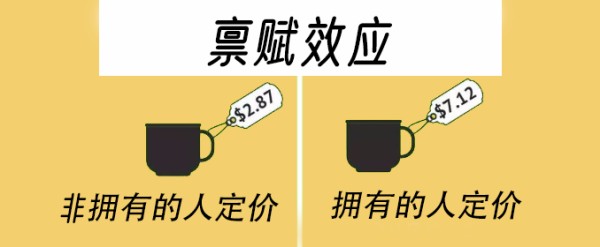
This valuation deviation caused by identity changes is the biggest source of friction in market transactions. Experimental psychologists once conducted a famous mug experiment: some people were given mugs, and others were responsible for bidding to buy them. The results showed that those who owned the mugs asked for more than twice what buyers were willing to pay, on average. This magnification relationship accurately captures the pain people feel when facing "loss". When a seller decides to sell an old item, what the brain feels is not the joy of getting money, but a sense of deprivation of self. In order to compensate for this pain, the price naturally rises.
Loss aversion and emotional projection of self
To understand why things become more expensive when they become yours, you must delve into the human brain’s extreme sensitivity to “loss.” In behavioral economics, loss aversion is a core concept. The pain of losing something is about twice the pleasure of gaining something of equal value. When we own something, we are at a psychological "base point." If we sell it, our psychological state will drop below the baseline point, and this negative emotion will prompt us to demand higher compensation to balance the inner feeling of indebtedness.
In addition to loss aversion, self-projection is also an important factor. Humans tend to be overconfident and have a positive opinion of the things they associate with. When you buy a dress and wear it, your self-confidence, aesthetic vision, and the pleasant time you spend wearing it will be transferred to the dress subtly. It is no longer a synthetic fabric hanging there in the mall, but a part of your exquisite life. This connection gives the object a certain "spirituality". Under this psychological mechanism, selling the item at a low price is like belittling one's own taste or denying one's past. This kind of self-esteem game makes rational price judgment completely invalid.
In the second-hand book market, this emotional projection is particularly strong. To the seller, an old book full of creases and notes is a witness to the collision of ideas, and its value far exceeds that of a new book; while to the buyer, it is just a dirty second-hand book. This kind of incommunicable emotional code leads to frequent cold spots in transactions. Only when we realize that the so-called "high value" is actually an illusion called "mine" created by our brains, can we break out of this psychological cycle and face the circulation of items with a more objective attitude.
The ownership trap behind seven-day no-reason returns
The "seven-day no-reason returns" service commonly launched by modern e-commerce platforms is a huge benefit to consumers and greatly lowers the threshold for purchasing decisions. However, from a psychological point of view, this is actually a carefully designed "endowment effect" ambush. When you order an expensive coat because you are hesitant, your psychological defense is: you can return it if you don’t like it anyway. But merchants know very well that as long as this coat enters your home and is hung in your wardrobe, the probability of returning it will drop off a cliff.
Once the package is opened and the coat is put on and looked at in the mirror, at that moment, the "sense of ownership" has quietly arisen. Although the probation period has not yet passed, the brain has already begun to classify it as private property in the mental account. At this point, the decision to return is no longer "giving up purchasing an item" but becomes "eliminating an item from one's assets." This role change from "buyer" to "owner" completes the upgrade of the item's valuation in a very short period of time. The concerns that I thought it was a bit expensive and the price-performance ratio was average before placing the order became insignificant in the face of the sense of ownership.
Merchants take advantage of this time difference to allow consumers to establish a temporary connection with the product. This strategy is more common in the furniture industry. Some brands allow customers to take home a mattress or sofa and try it out for thirty days or more. During these thirty days, you slept on this bed and watched TV shows on the sofa. The items gradually became tainted with your body odor and living habits, and they have completely integrated into your home environment. When you are finally faced with whether to contact logistics for a return, the sense of detachment caused by the waste effect will make you feel extremely cumbersome and frustrating. You'd rather convince yourself that this piece of furniture is comfortable than go through that "losing" process.
How free trials induce a false sense of control
In addition to return promises, "one yuan trial for the first month" or "free trial for seven days" of various software services are also variations of the endowment effect. When you click to receive free membership benefits, you think you are taking advantage, but in fact you are handing over your psychological sovereignty. During the trial, you get used to HD picture quality, ad-free privileges and a massive music library. Once these privileges become the "norm" of your digital life, they constitute your current endowments.
When the trial period ends and the system prompts you that you will lose these rights if you do not renew, the psychological pressure you face is not "whether you want to spend money to buy a service", but "if you don't spend money, my current status and enjoyment will be taken away." In order to maintain the status quo and prevent themselves from experiencing the sense of loss of falling from the peak to an ordinary user, most people will choose to continue paying. This reliance on the status quo and resistance to losing existing rights and interests are the secret weapons that enable merchants to maintain high renewal rates.
This mechanism has also been tried and tested in car sales. Salespeople are always eager to invite you for an in-depth test drive and even allow you to drive it home for the weekend. Once you get used to the feel of the steering wheel, the navigation interface, and the envious looks of your neighbors, the car has taken root in your mental map. If you finally decide not to buy it, when you return the key to the store clerk and sit back in your old car, the feeling of gap is a direct physiological reaction after being deprived of the endowment effect. To eliminate this discomfort, many customers who were teetering on the edge of their budget will end up placing orders.
The sense of quasi-ownership and crazy bidding at auctions
On the auction floor, the endowment effect takes on a more subtle form that psychologists call "quasi-ownership." When you are bidding, if you remain the highest bidder for a period of time, your subconscious will start celebrating your victory early. At this point, you have psychologically "possessed" the piece of art or antique in advance. As the auction hammer continues to rise, you are not only fighting for the goods, but also defending the "quasi-ownership" you have formed.
This mentality can lead bidders into irrational madness. Whenever someone offers a higher price, what you feel is not rational competition, but a sense of threat of being robbed. In order to prevent something that is "already mine" from falling into the hands of others, bidders often keep raising prices, and the final transaction price often far exceeds the true market value of the item. This “bidder’s curse” is the product of the endowment effect and competitive pressure.
This sense of quasi-ownership can also be seen everywhere in the shopping experience in offline supermarkets. Merchants encourage customers to pick up the products and play with them, try on watches or listen to headphones. Psychological research shows that the longer an object is touched, the stronger the sense of connection an individual feels and the higher their valuation. This is why shopping guides always try to find ways to hand the products to you instead of letting you watch them from across the counter. As soon as your fingertips touch the object, the gears of the endowment effect start turning. It is silently telling you: This thing already belongs to you, and putting it back will be a loss.
The road to rational trading that transcends psychological biases
Being aware of the existence of the endowment effect is the first step towards rational consumption. In second-hand transactions, sellers should try to look at their products from a buyer's perspective and ask themselves this question: If I saw this item on the market today, how much would I be willing to pay for it? This kind of “empathy” can help strip away that excess emotional premium. By consulting objective market transaction price records instead of pricing based on feelings, the success rate of transactions can be greatly improved.
For consumers, they need to remain highly vigilant when faced with the temptation of "seven days no reason to return" or "free trial". During the trial period, deliberately keeping a distance from the items and not rushing to integrate them into normal life can effectively inhibit the endowment effect. If you think something is dispensable before placing an order, even if you feel reluctant to part with it after trying it out, you should remind yourself that it is just loss aversion. Try to think of returns as a "stop loss" rather than a "loss" in your mind, which can help us take back the initiative in decision-making.
Understanding this psychological pattern does not make us callous. Emotional premium itself is also a kind of interest in life. It gives old things a soul and makes life full of warmth. But when we are at a critical moment when we need to make money decisions, we must learn to temporarily remove the filter of warmth. In this world full of marketing routines, only by seeing through the illusions that make us "feel more valuable" can we truly take control of our wallets and lives, and not be swayed by those false senses of ownership. Only when we are no longer possessed by objects in turn are we the real owners of these objects.
网址:Why do you think something is worth more than it actually is once it becomes yours? https://www.yuejiaxmz.com/news/view/1421033
相关内容
How do you like life on Mars?= What do you think of life on Mars?——青夏教育精英家教网——有关放松的英语作文(通用22篇)
快乐工作的17个秘诀
缓解压力的英语作文(通用19篇)
有助于提升幸福感的9个日常习惯
生活感悟英文短句子190句
阅读理解。 Here's an interview to a pilot about his life.(R=Reporter; P= Pilot) R: How much time do pilots actually spend flying a plane? P: It varies (WES'
第1456期: 乐趣是健康生活的秘诀(上)
健康的生活英语作文(通用22篇)
放松自己英语作文(精选14篇)
随便看看
最新动态分享
- 旧书当废品卖 能否循环利用起来
- 关于二手书籍回收与再利用的调查问卷
- 废纸回收 韶关二手书籍回收 诚信交易
- 煤炭固体废物利用与处置
- 别再扔了!我靠二手物资回收再利用一年省下3万多
- 居家旧物改造进阶版,变废为宝,颜值与实用并存
- 旧物改造教程:简单几步变实用
- 旧衣改造全攻略:省下80%置装费,一件变三件的实战技巧
- 衣服改造小技巧#废物利用 #旧衣服改造 #变废为宝 #生活小技巧
- 旧衣物改造策划书
热点动态分享
- 146829
- 57917
- 46389
- 43026
- 42162
- 31384
- 27084
- 25769
- 23623
- 20298